Ship more software
with
smaller teams.
LFG is an AI software factory that turns requirements into production-ready software. It plans the work, builds the features, runs the tests, documents the changes and prepares the release, while engineers review the decisions that matter.
Built for software services companies, startups and growing businesses.
Free to start · runs on your own repository · bring your own model keys
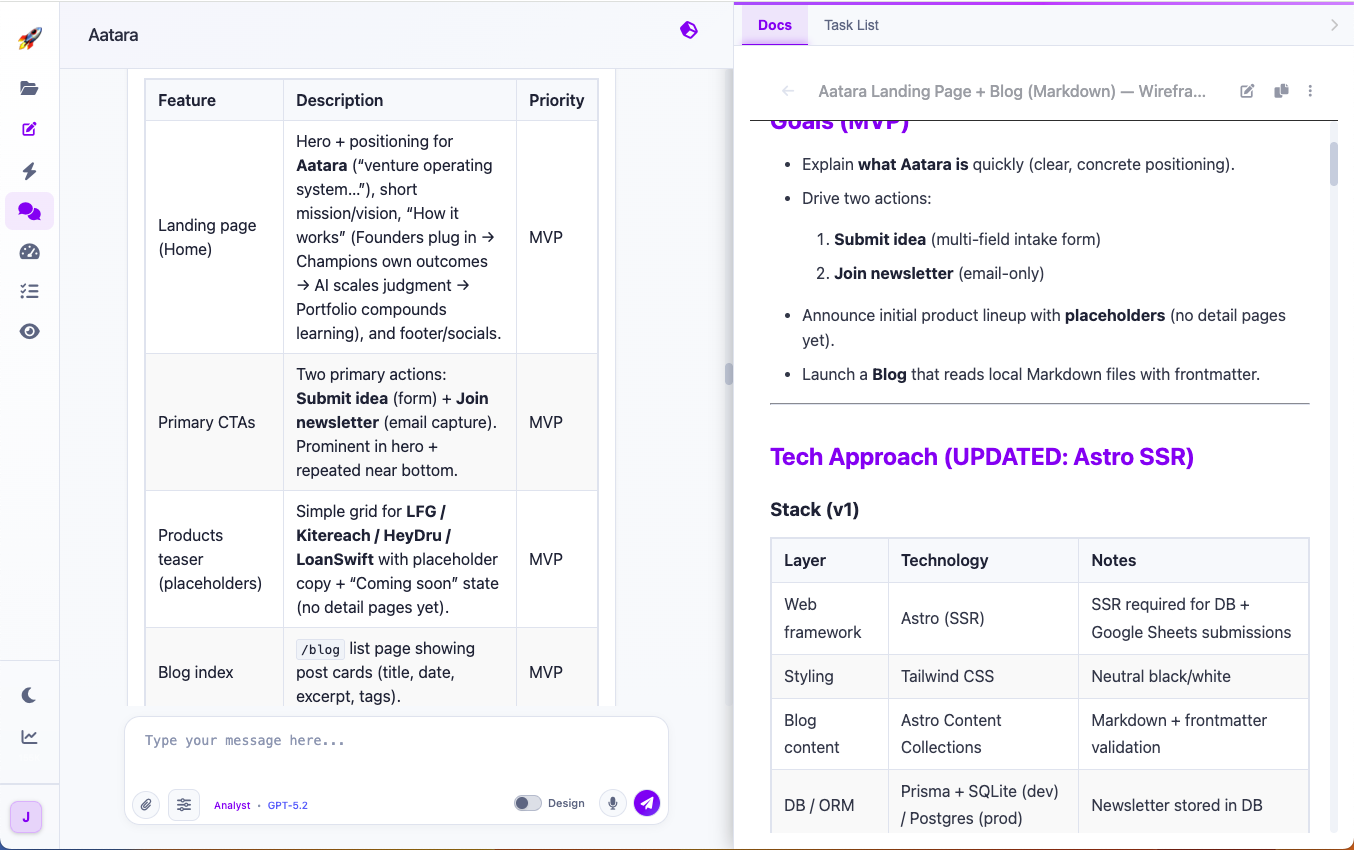
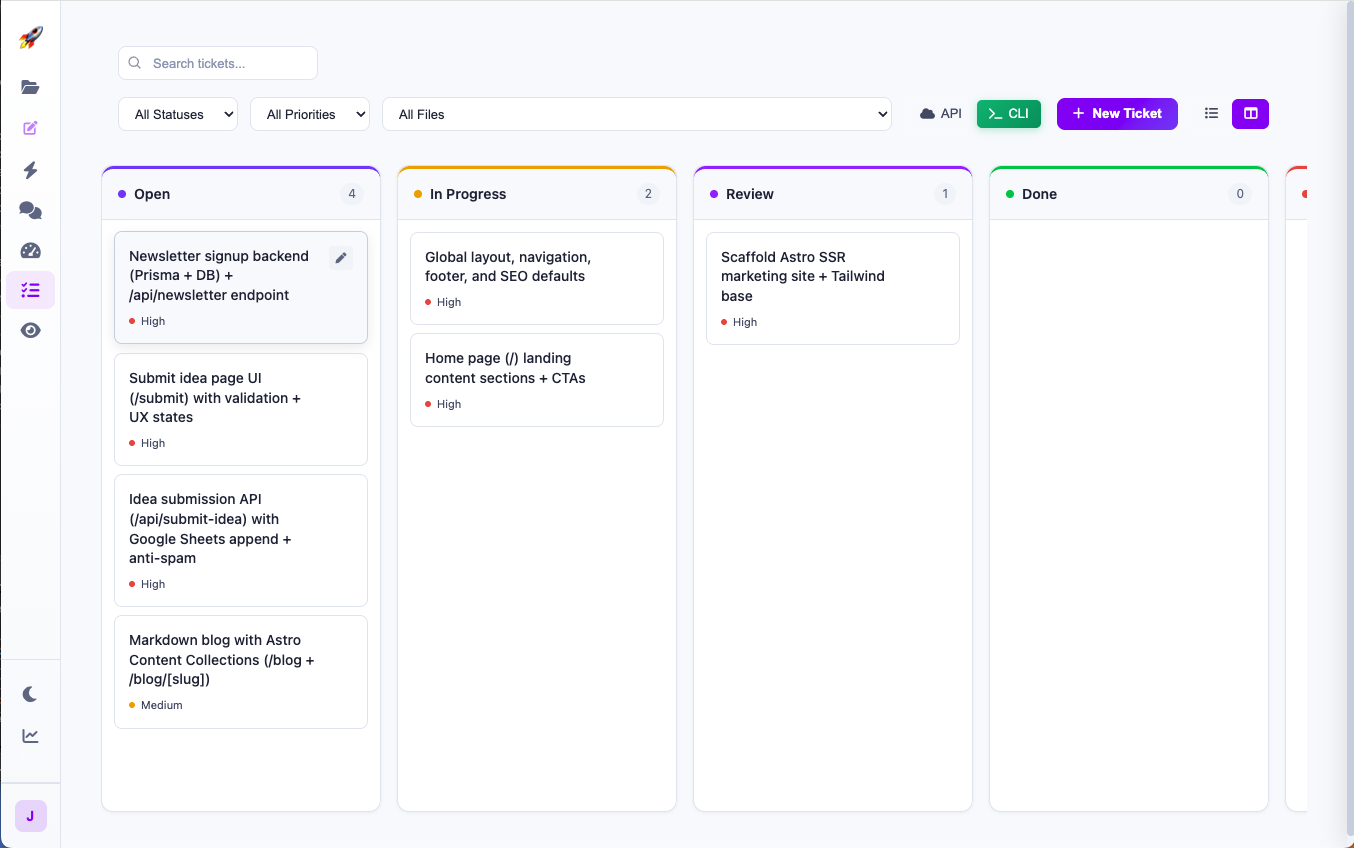
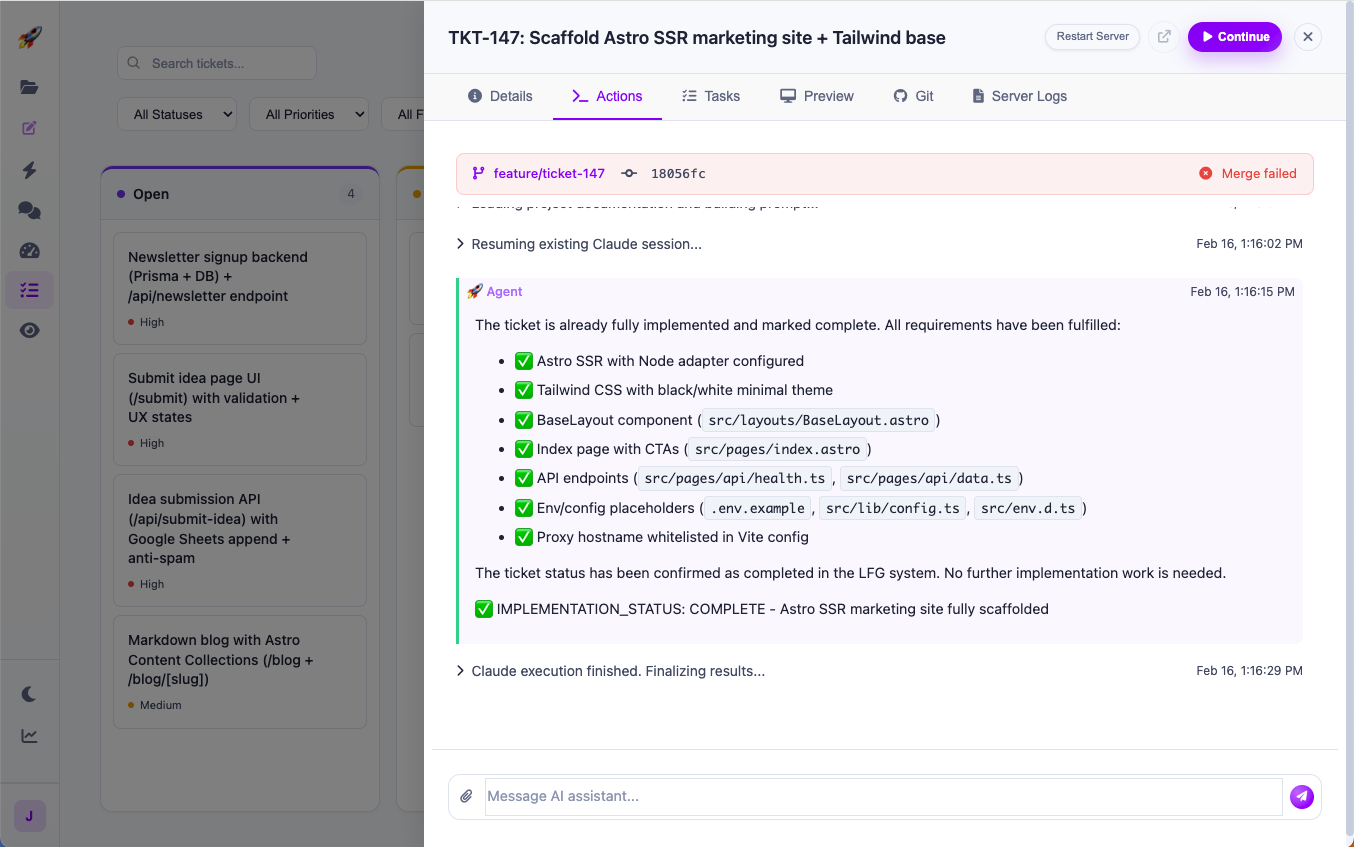
Plan · yours to review
Build · runs on its own
Ship · your sign-off
Review plans and tickets as needed. LFG makes them quick to produce, and quick to check.
An AI software factory for modern software development
Buy the outcome, or run the factory.
LFG Delivery
We own the outcome.
Hand us a requirement, a backlog or a product. You get tested, merge-ready pull requests in your own repository, against acceptance criteria agreed before we start. If it does not meet them, it is not done.
- Growing businesses and SMBs
- Startups and product teams
- Backlogs that keep slipping
- Internal tools and modernization
LFG Factory
You own it. We supply the machine.
Run the factory inside your own delivery organization. Client requirements become scoped plans, tickets, tested code and release-ready work — configured to how your firm works, under your name, with your engineers holding the gates.
- Software services companies
- IT consulting firms
- Digital and development agencies
- Implementation partners
Coding got cheaper. Software delivery didn't.
A coding agent can write a feature. Someone still has to understand the requirement, find the right context, make the architectural decisions, coordinate the dependencies, verify that it all works together, and make sure the release actually meets the business objective it started from.
LFG turns those disconnected activities into one continuous delivery pipeline.
Traditional AI-assisted development
Eleven steps, and a person is the thread running through all of them.
LFG
Eight stages, and the pipeline carries the work between them.
More than a coding agent.
Claude Code, Codex and the other coding agents are excellent execution engines. We run them inside LFG. What LFG adds is the coordination around them.
| Coding agents | LFG software factory |
|---|---|
| Starts with a prompt | Starts with a business requirement |
| Works on a coding task | Coordinates an entire project |
| The developer supplies context | Maintains project context |
| Generates code | Plans, builds, tests and documents |
| Sessions are managed one at a time | Work is broken into dependency-aware tickets |
| The developer coordinates execution | The factory coordinates execution |
| Code is the artifact | PRDs, architecture, tickets, code, tests, documentation |
| QA happens separately | Verification is part of the pipeline |
| The developer owns the workflow | People supervise outcomes and the decisions that matter |
They are the engines. LFG is the factory built around them.
Which is why better coding models make LFG better rather than redundant. See how the factory works.
Planned, not looped
You can't loop your way to working software.
Give an agent a large, loosely defined goal and let it run, and it drifts. Long-running tasks lose the thread. Genuinely complex problems do not survive being held in one long session. And because nothing is checked along the way, you find out at the end — when the work is finished, confident, and wrong in a way nobody has looked for.
The usual response is to run it again. A better prompt, a longer leash, another few hours. But iteration is not a method, and repeating an unplanned process mostly buys a more expensive way to arrive at the same place. Endless loops do not fix anything, because the missing thing was never more attempts. It was a plan.
What works is deliberate and curated. Decide the architecture before anything is built. Break the requirement into pieces small enough to check on their own. Write down what “done” means before the work starts, so passing is a fact rather than an opinion. Verify each piece as it lands, and send failures back instead of letting them accumulate into the next task. Keep a person on the two decisions that carry the most consequence.
That structure is the whole of what LFG is. It replaces the loop with a plan, and the plan is what makes the output something you can hand to a client.
The factory
From requirement to release.
Six stages. Every one of them produces something you can inspect.
LFG reads the requirement alongside your existing codebase, documentation and the business context around it.
Output
The factory settles the architecture and breaks the work into dependency-aware implementation tasks.
Output
Tickets are executed inside isolated development environments, in parallel wherever the dependency graph allows.
Output
Tests, application behaviour and the original acceptance criteria are all checked before anything reaches a person.
Output
Your engineers review architecture, security-sensitive decisions and code quality — not every intermediate step.
Output
Changes are prepared for merge and deployment with the documentation that explains them.
Output
For software services firms
Built for the new economics of software services.
Your clients know AI can produce software faster. They will increasingly expect that efficiency to show up in your timelines and your pricing.
But handing every developer a coding agent does not change your delivery economics on its own. You still coordinate teams, requirements, QA, reviews and releases much the way you always did. LFG changes the unit of production: agents handle more of the execution, and senior engineers supervise architecture, quality and the client outcome.
Increase delivery capacity
Run more client projects without expanding your bench in proportion.
Protect margins
Capture the AI efficiency instead of simply passing fewer billable hours to the customer.
Make senior engineers multiplicative
Let experienced engineers supervise several streams of execution instead of writing every implementation themselves.
For businesses and startups
Need software built? Skip assembling another development team.
A customer-facing application, an internal tool, a SaaS product or a stubborn backlog — LFG can take the project from requirements through implementation and verification. Instead of paying for a large team for months, you work with a small delivery layer backed by the factory.
Build a new product
MVPs, SaaS applications and customer-facing products.
Clear a backlog
Features, bugs, integrations and modernization work your team keeps postponing.
Build internal software
Operational tools, dashboards, workflows and business applications.
Modernize existing systems
Refactoring, migrations, integrations and new functionality inside an existing stack.
Proof
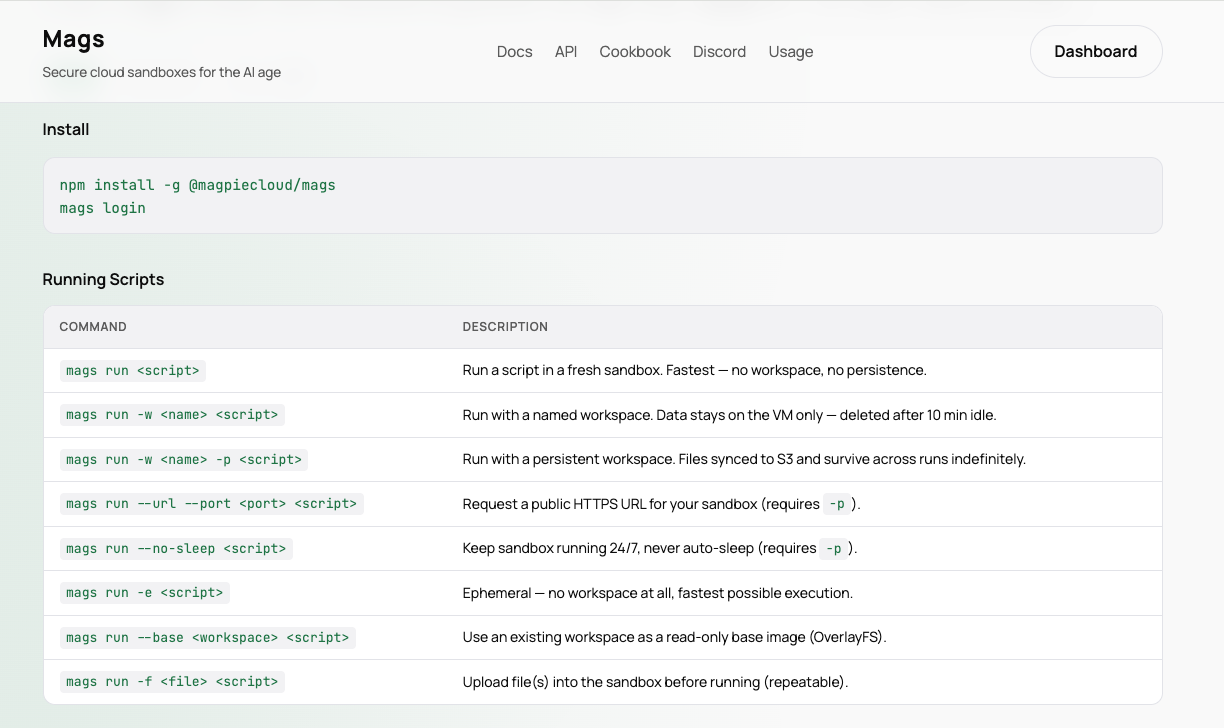
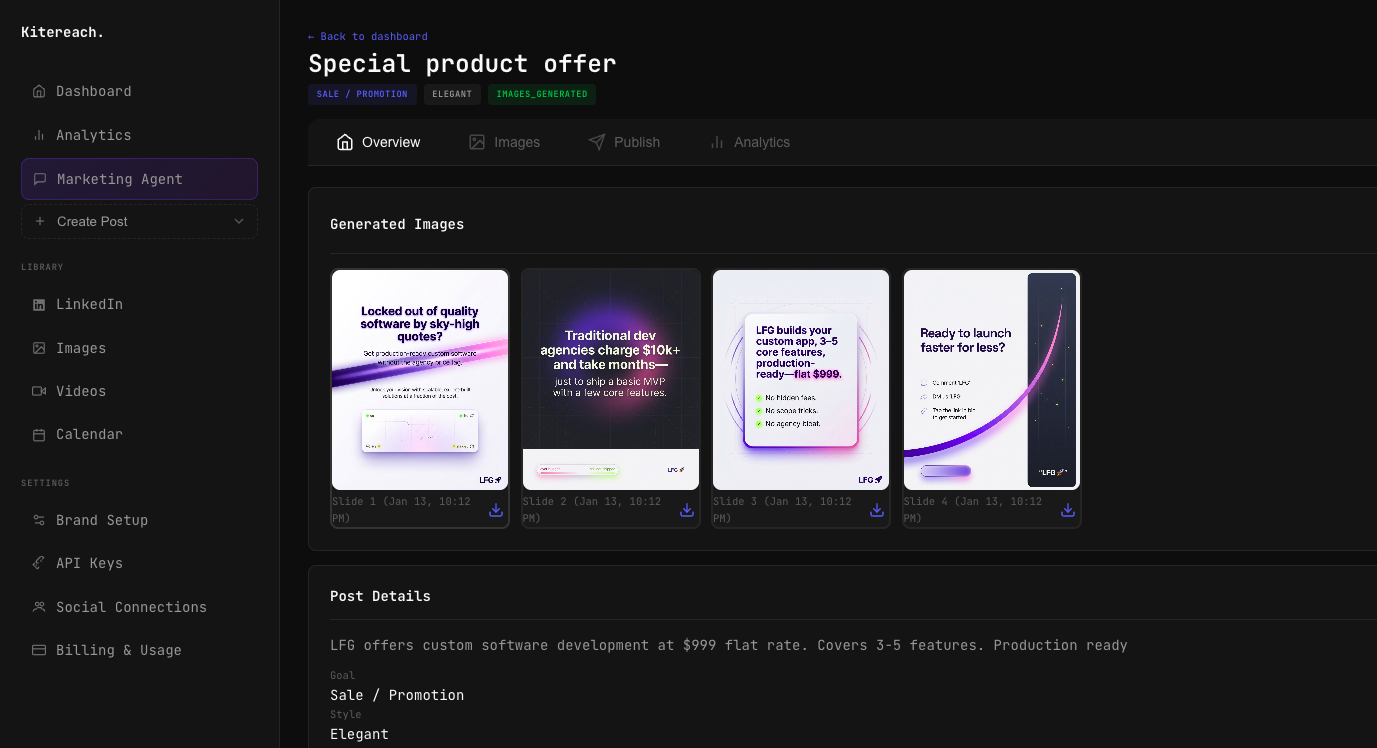
Software built with LFG.
Production products, built end to end on the factory. We are its first customer.
Visibility
No black-box outsourcing.
Traditional software outsourcing means weekly status meetings and waiting to find out whether a project is actually on track. With LFG the factory itself is the project record.
You should not need a status meeting to know whether your software is getting built.
Control
Your code remains your code.
Your repository
LFG works inside your existing Git workflow and your own repositories. Nothing is held hostage.
Human approval
Agents do not decide on their own what enters production. A person signs off.
Isolated execution
Build jobs run inside isolated environments, not loose on your machines.
Audit trail
Requirements, tickets, code changes and reviews stay traceable after the fact.
Model choice
Use the model that suits the job — Claude, GPT, Gemini, or open models — rather than one vendor's.
Self-hosting
Stricter requirements can run the whole thing inside your own infrastructure. The core is MIT.
Build notes
All postsAug 31, 2026 · 1 min read
AI Will Collapse Organizational Complexity
Companies did not grow large only because there was a lot of work to do. They grew large because coordinating the work was expensive — and that is the cost AI removes.
Aug 30, 2026 · 1 min read
The Smallest Companies May Become the Biggest Producers
For most of software history, output scaled with headcount. AI breaks that relationship — and the manager of tomorrow may supervise 200 agents rather than 10 people.
Aug 29, 2026 · 1 min read
Software Factories
\"AI coding agent\" will eventually feel like a transitional term. The next important abstraction above coding agents is not a better coding agent — it is the factory that coordinates them.
Give LFG one real piece of work.
Send us a project, a feature or a backlog item. We will show you how LFG scopes it, plans it, and would execute it through the factory. Judge it on that, not on a demo.