From requirement to release.
Software delivery is not just writing code. It is understanding what was asked for, deciding how to build it, sequencing the work, verifying it holds together, and being able to explain any of it afterwards. LFG runs that whole path as one pipeline.
Understand
Before anything is built, the requirement has to be understood in the context of the system it lands in.
- Reads the requirement alongside the existing codebase, documentation and prior decisions on the project.
- Asks the questions a good engineer would ask before starting, rather than guessing and building the wrong thing.
- Writes the requirement down as something reviewable, so disagreements surface now instead of at delivery.
What it produces
Where you come in
You correct the understanding before a line of code exists — the cheapest place to catch a misread requirement.
Plan
Architecture and sequencing are decided once, deliberately, and recorded.
- Settles the implementation strategy and the architectural decisions the work depends on.
- Identifies which systems are affected and what has to happen before what.
- Breaks a large requirement into an executable graph of smaller tasks with their dependencies made explicit.
What it produces
Where you come in
Your engineers review the plan and the ticket graph. Changing the approach here costs a conversation, not a rewrite.
Build
Tickets are executed by coding agents inside isolated environments.
- Each ticket runs in its own sandbox, on its own branch, never against a main line.
- Independent tickets run in parallel wherever the dependency graph allows it.
- Context from earlier tickets travels forward, so ticket forty knows what ticket three decided.
What it produces
Where you come in
Nothing here needs supervising step by step. You can watch any ticket live if you want to.
Verify
The agent that wrote the code is not the only thing that checks it.
- Tests run, application behaviour is exercised, and the original acceptance criteria are checked against what was actually built.
- Failures go back for a fix and run the gauntlet again rather than landing on a person's desk.
- What reaches review has already survived the checks that would otherwise eat a reviewer's first pass.
What it produces
Where you come in
You see the failures too. A pipeline that hides its own errors is not worth trusting.
Review
A person approves, on the things that actually need judgment.
- Engineers review architecture, security-sensitive decisions and code quality.
- Review happens on a complete, verified change rather than on every intermediate agent step.
- The approval is recorded against the ticket and the requirement it came from.
What it produces
Where you come in
This gate is always human. It is the part of the process we are least interested in automating away.
Ship
The change is prepared for merge and deployment, with the documentation that explains it.
- A pull request against your repository, in your existing Git workflow.
- Documentation describing what changed and why, written from the decisions on record.
- The full trail from requirement through to release stays queryable afterwards.
What it produces
Where you come in
Merging is your call, in your repository, under your branch protection rules.
The record
Every stage leaves something you can look at.
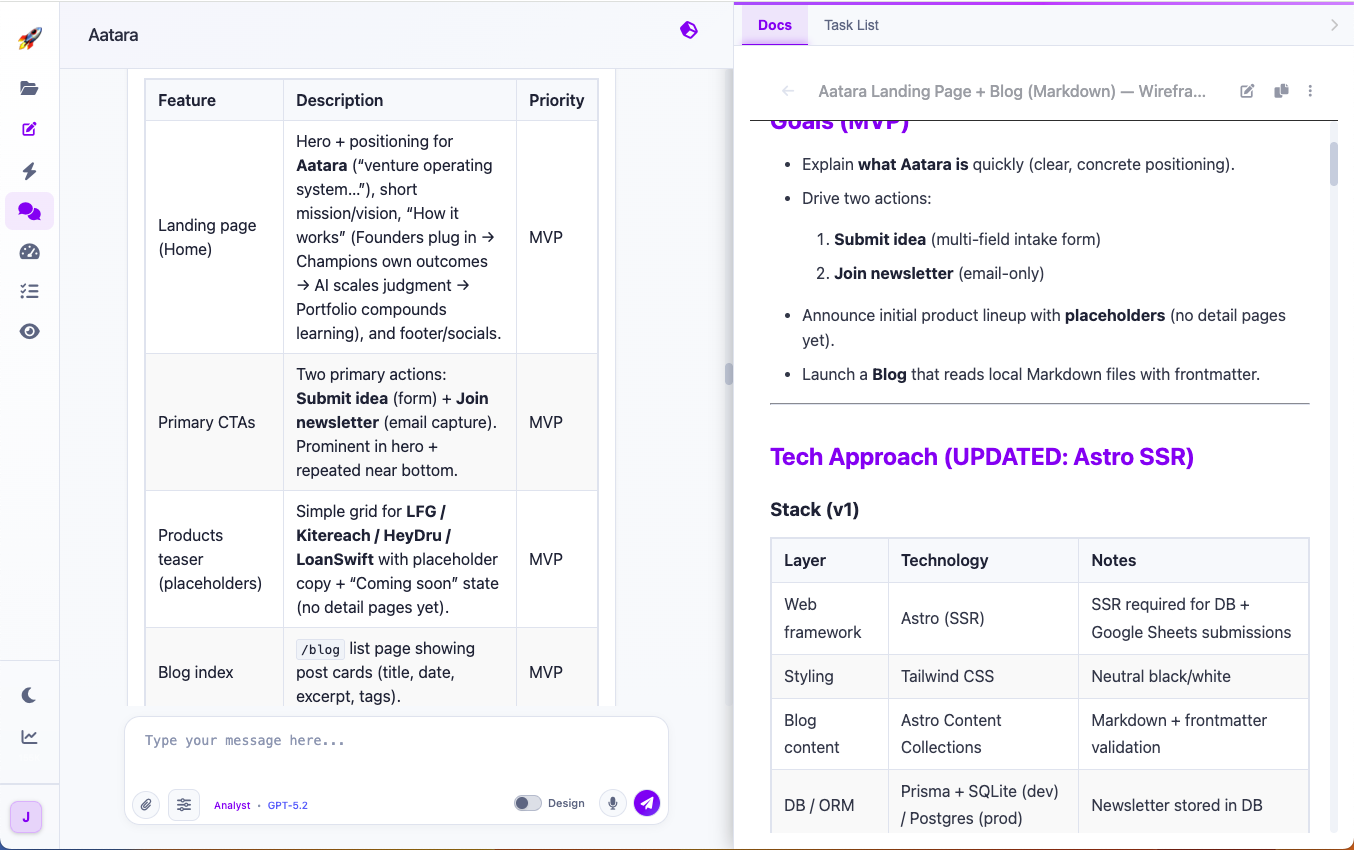
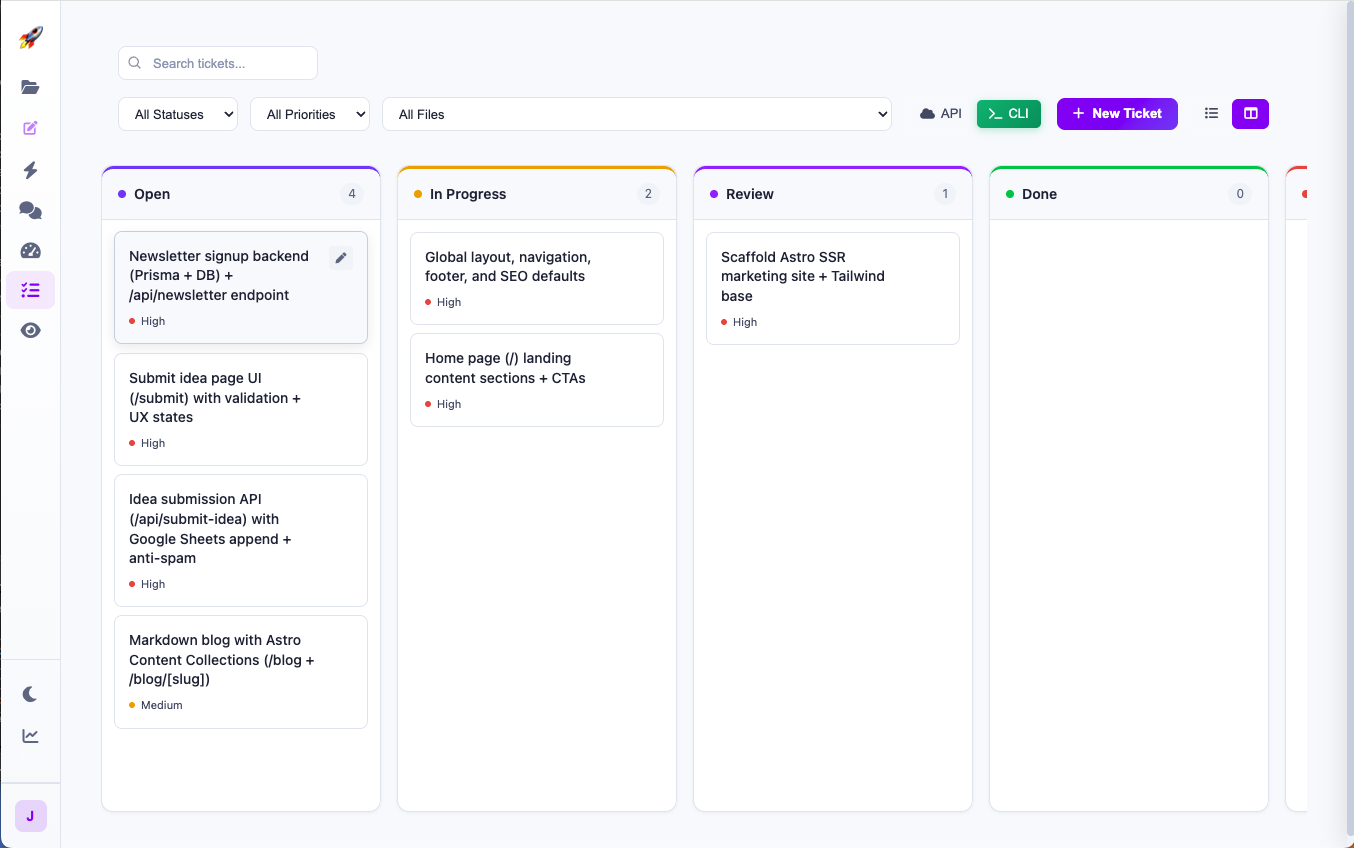
Requirements, tickets, execution logs, diffs, previews and review state — while the work is happening, not in a report afterwards.
The engines
The factory is not tied to one vendor.
Claude Code, Codex and other coding agents execute the tickets. Use the model that suits the job, the client, or the budget — and bring your own API key.
 Claude
 GPT
GPT
 Gemini
 Grok
Grok
 DeepSeek
 Kimi
Kimi
 GLM
GLM
When coding models improve, the factory improves. More about LFG Agent.
Watch it run on something of yours.
Send a real project, feature or backlog item. We will show you how the factory scopes it, plans it, and would execute it.